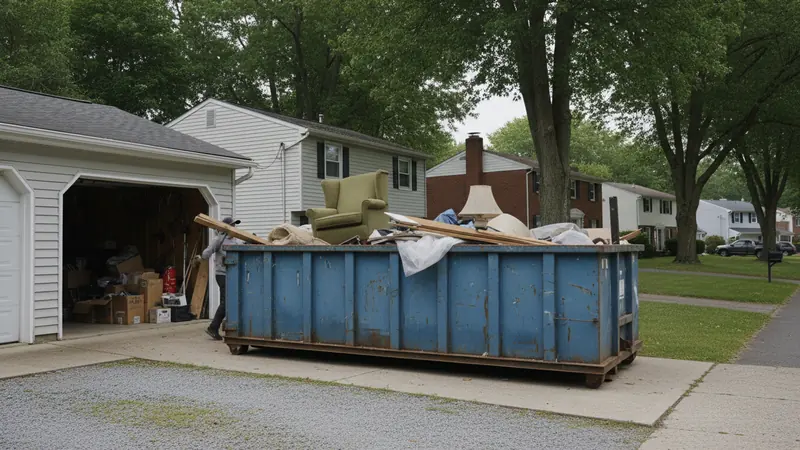
Clear a stripped bathroom, damaged drywall or a demolished patio. Keep the wrong materials apart. Know what you’ll pay for weight. Check where your debris can go.
Define what the crew will remove
After a bathroom tear-out, “take everything” can mean loose debris by the driveway or fixtures still attached upstairs. Tell the hauler which you mean. Point out what has already been disconnected. Show them what is still fastened in place. Settle who will remove it. Photograph the route out. Take pictures of the pile too. Include stairs, narrow doors and finished floors in the work description.
Howard County charges for discarded building materials even when you did the work yourself. You can find more on the county junk removal page. Carrying debris away is different from creating it. A price to load broken drywall does not mean the crew will strip the remaining walls. It does not tell you whether they’ll remove fasteners. Nor does it tell you whether they’ll protect rooms you still use.
Write down where the work ends. Will the crew collect loose fragments? Will they sweep the route? Or will they only empty the pile? If another contractor is still tearing things out, agree when the hauler should arrive. Settle what happens to debris left later. A pickup can look unfinished if you expected it to cover a different stage of the renovation.
Source: Howard County Bureau of Environmental Services, Transfer Station — Construction & Demolition Debris, undated live guidance; no effective date stated. Gathered 2026-09-23. Scope and cleanup questions are practical guidance.
Understand the weight charge before signing
You can find the full landfill fee schedule on the county page. Construction and demolition debris costs $106 per ton, effective July 1, 2026 through June 30, 2027. That pays for disposal at Alpha Ridge. It does not cover the crew, truck, container, stairs or work to detach anything. The schedule’s resolution reference conflicts with its stated fee year. You can find that discrepancy on the county page. We have used the printed effective dates for this figure.
We could not find a county-specific primary-source price schedule for private construction debris removal. We cannot back up an estimate for a bathroom cleanout or dumpster rental.
Ask whether you’ll pay by weight, truck space, time or an agreed amount of work. For a container, ask how much weight the price includes. Check the charge for extra weight. Ask which materials you can put in it. Agree the pickup terms. If you’re paying for labour, check whether that includes carrying debris from inside. Ask for the scale ticket if your invoice passes on disposal costs by weight.
Keep household contents separate when you plan the load. Howard County charges mixed loads containing construction debris at the commercial solid-waste rate or the applicable waste rate, whichever is higher. Adding old possessions to the renovation pile can change how you’re charged.
Source: Howard County Bureau of Environmental Services, FY27 Landfill User Fees and Charges, effective 2026-07-01 through 2027-06-30; FY27 Landfill Usage Rules, fiscal-year designation, no separate effective date stated. Gathered 2026-09-23. Quote questions are practical guidance.
Confirm a destination for concrete and soil
A demolished patio needs a different conversation from a stripped room. Alpha Ridge’s commercial-customer notice excludes soil from commercial contractors. It also excludes large quantities of stone, brick, block, asphalt and concrete from them. The county does not define “large quantities” in that notice. A rubble price in the fee schedule does not tell you whether your contractor’s load will be accepted.
Before work begins, ask the hauler where the debris will go. Have them confirm that the facility accepts your material in that quantity. Describe anything attached or mixed in. Concrete mixed with soil and household rubbish needs a clearer description than “clean concrete.” Keep the agreed description with the quote.
If the provider changes destinations, settle who pays extra travel or disposal charges before the truck leaves. A quote that assumes Alpha Ridge will take a commercial masonry load leaves this unsettled. Driving the load yourself does not guarantee that the facility will take it. Check your proposed load with the facility. A restriction on commercial loads is no guarantee for residents.
Source: Howard County Bureau of Environmental Services, Commercial Landfill Customers, restriction marked “Effective Immediately,” no calendar effective date stated. Gathered 2026-09-23. Destination and pricing questions are practical guidance.
Set aside reusable materials before they break
Decide whether to reuse cabinets, doors or fixtures before the crew tears them out. Howard County encourages you to salvage materials before demolition. Its construction-debris recycling guide lists options by material. It warns that businesses change what they accept. A listing does not mean the county endorses a business. Nor does it prove that a recipient will take today’s load.
Ask the intended recipient what condition they need the items in while they’re still intact. Check their requirements for hardware and attached materials. Ask about delivery terms. Tell the crew what to preserve. Show them where to put it. Agree what happens if the recipient turns it down. You still need a price for taking those materials somewhere else.
The county guide warns that you may need to travel outside Howard County to recycle some materials. If the provider promises to “recycle everything”, ask them to name the destinations. Check what each will receive. Ask for receipts if the contract promises recycling. Materials tipped at Alpha Ridge’s Transfer Station follow the landfill route the county describes. Taking renovation debris there does not itself prove it was recycled.
Source: Howard County Bureau of Environmental Services, Construction and Demolition Debris Recycling Guide, 2023 edition, no separate effective date stated; Transfer Station, undated live guidance, no effective date stated. Gathered 2026-09-23.
Resolve suspected asbestos before ordinary hauling
Old floor tiles, roofing, cement siding and pipe insulation can contain asbestos, according to the Maryland Department of the Environment. Stop disturbing suspect material if you uncover it. Have a licensed asbestos professional assess it before the crew breaks it up or puts it in the ordinary debris pile.
MDE’s homeowner guidance distinguishes intact material from material that can crumble or turn to powder under hand pressure. Its homeowner FAQ says a licensed asbestos contractor should remove material that is already friable or will become friable. A general hauling agreement does not tell you who will assess or handle that work.
Howard County lists asbestos-containing material on its Transfer Station page with separate handling instructions. That does not mean you can put it in an ordinary mixed load. Have the asbestos professional and receiving facility settle how to package it before loading. Have them agree how to deliver it too. Suspect material may turn up behind a wall or beneath flooring. Make sure your contract says how the crew pauses work if that happens. Put who arranges specialist help in the contract. Include how you approve any changed price.
Source: Maryland Department of the Environment, Asbestos for Homeowners, undated live guidance, and Frequently Asked Questions for Homeowners, 2025 file designation, no effective dates stated; Howard County Bureau of Environmental Services, Transfer Station, undated handling guidance. Gathered 2026-09-23.
Put the remaining work in the contract
Before you sign, compare the quote with the room itself. Name the finishes and fixtures you want removed. Settle who disconnects services. Describe the route through the house. Name the disposal destinations. List the materials excluded. State whether the price covers only debris already there or also debris from work still to come.
If the same contractor will do home improvements, Maryland’s Home Improvement Commission advises you to check their licence. Get a current liability insurance certificate. Use a written contract. Where you need a building permit, the commission advises you to see it before work begins. The landfill vehicle permit discussed on the county page is about access to Alpha Ridge.
Agree how you’ll approve changes. Hidden flooring, unexpected masonry or suspect insulation can change the work. Before extra work starts, get a written description of what was found. Have the contractor write down what the crew will do. Get the cost in writing too.
Source: Maryland Department of Labor, Maryland Home Improvement Commission, Consumer Advice, undated live guidance; no effective date stated. Gathered 2026-09-23. Debris scope and change questions are practical guidance.